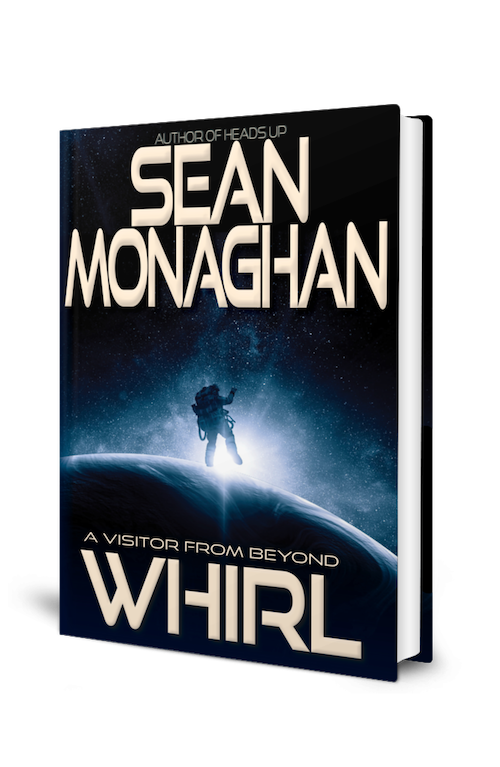
Free Fiction Fifteenth – Water Robot

So I’m trying something new here, putting up a story to read for free, just for a week or so. And I’m going to see if I can remember to do it every month, on the fifteenth (actually, that’s easy – I can schedule it – what’s trickier is remembering take it down again a week later). This is intended to promote my fiction, of course, but also to make it available to those who want to give a story a try, and to make things a little easier to get hold of in these trying times.


First up is one from a while back, “Water Robot”. The ebook is available in the usual places, including directly from me from the website. No AI here, all written by a real human (me).


Water Robot

A dazzling whipcrack of a story about isolation and connection at an idyllic beach.

Brit and Stan’s chilled beach life seems perfect. When Brit finds a deepwater robot cadaver washing up in the surf she knows she must confront every part of her life.

A tale of danger and deception on a beautiful coast, where lives balance on a razor’s edge.


Chapter 1

Brit ran down the shore with Stan hollering behind. Overhead a gull wheeled, squawking at her with piercing calls. Brit hit the breakers at a gallop.

“Come back,” Stan called. “Get out of the water.”

Quickly the water reached Brit’s waist and she shivered at the cold. “It’s dying,” she said, knowing Stan wouldn’t hear.

The robot was just floating, only its loose back and head above the waves. Like an iceberg, nine tenths below the surface. Tendrils of the thing rippled through the water. It came up in a wave, rode over the top and disappeared from sight in the trough behind.

Brit was almost swimming now. The salt spray stung her eyes. She got a whiff of something rotten. The robot. It must have swum up from the deeps.

“Brittany!” Stan splashed through the water behind. If he had still been calling himself a film-maker, he might have been recording all this. Too bad he’d lost track of that somewhere.

She ducked under a breaking wave and breaststroked a few meters underwater. When she popped up she couldn’t see the robot anymore. At the top of the next wave she kicked to get some extra height and saw the thing close by, off to the right. She was caught in mild rip, pulling her along the coast.

“It’s there,” Stan called. “You’re real close.”

Odd. Now he was being encouraging. She should be used to his swings by now.

Flipping on her back she kicked across the surface, staring at a sky smeared with streaky, icy clouds. It might rain again in the next day or so. Not great for the swamp, though the vegetables could use it.

Riding up and down another couple of waves, Brit suddenly got a mouthful of salty water from a cross wave. Gagging and spitting she found she was right by the robot. It was much bigger than she’d expected.

“Don’t drown,” Stan called. She couldn’t see him now.

The robot reached up for her. Its arm was green, multiple jointed. Moving across the surface against the current little beads of spray splashed off it. A multi-fingered hand stretched above the surface. There had to be ten fingers, maybe fifteen. They were gnarled and sodden, strips of flesh hanging from them.

“It’s all right,” she said, unsure if it could hear her. “I’m going to pull you to shore.”

The hand kept coming. Brit put her hand up. The robot’s dwarfed hers.

“Watch out,” Stan yelled. He’d swum within a few meters. He floated head up in the same trough.

“It’s okay,” she said. “Come help.”

The long fingers curled around her hand. They wound and wrapped like octopus tentacles, crossing over and making a basket.

“That’s it,” she said. She stretched her legs out and kicked back, watching the next wave. If she could get it moving then they would be able to almost surf in the breakers. They might wash up a ways along the beach, but at least the robot would be safe.

Stan paddled a couple of strokes closer, but then held back. “You’re an–”

Brit lost the end of the sentence as the robot dragged her down.

Chapter 2

Stan crashed through the ocean, hauling Brit back. The thing had her arm and her head caught up in its whipping tendrils. He had to wait for the troughs to get his feet onto the sandy bottom.

He wished he’d taken a hit before he’d come after her. He felt sluggish and unattuned. No question, though, about pulling her out.

A wave broke over his back, driving them forward. He went under for a moment, got his feet down. The sand slid away as he pushed.

When he came up again he could see the house. He wasn’t making much progress. He hoped they didn’t drown. Another wave like that might shove them right under. The mess of the robot dragged them back and along the beach.

The stupid house should be helping him. Somehow. Smart enough to wash its own windows, call in for groceries and try to talk him out of watching wrestling all night, but not smart enough to do something useful like send out a buggy or fire a rope. Waste of Brit’s father’s money.

Scooping water with his free hand, he bumped his chest and felt the dose in his pocket. He was tempted to give it a blast to re-energize. The whirl was probably wrecked from the seawater. It wasn’t until he’d first lost sight of her that he’d really dived in. Then he’d found her still floating and had a moment to curse her when the hand rose up like some ancient dragon, dragging her back to its lair.

Another wave smacked him and he lost his footing. As he came up again the water had troughed down almost to his waist. Still holding Brit, he ripped the whirl from his pocket and brought it up to his mouth. The sudden rush of anticipation swept away with the next wave.

“No!” Stan let go of Brit as he grabbed for the whirl. He dove, got a hand on it, but couldn’t get a grip. It vanished in the cloudy swell. Splashing around he frantically searched. It took a moment before he realized he’d lost Brit.

Chapter 3

Brit woke staring at the spires. She felt disoriented, but the sight of the six bright towers rising skyward was reassuring. Some static sparkled around one as the house pulled energy from the atmosphere.

It dawned on her that she was alive.

She was alone in her bed, the soft white sheets pulled up to her neck. Overhead the ceiling and roof were dialed open.

“Awake?” the house said.

Brit scratched her scalp. “I guess.”

“Breakfast? Water?”

“Juice?” she said.

“Yes, of course. The swamp oil people are here.”

Brit sat up. “Already?”

“They’re waiting out in the sours.”

A nuisance at best. There were probably six of them this time. Eight. They’d be out there looking at the automatics sweeping the wetlands and calculating percentages.

The robot.

She remembered being in the waves, trying to pull the wet machine out of the waves. It had grabbed her.

“House. How did I get inside?”

“Stan brought you. That was first thing.”

“This morning.” Brit looked at the spires again. “What time is it?”

The house holoed the clock over the end of the bed. 4.48pm.

Afternoon.

She leapt out of bed. Naked. She rushed to the shower, lathered under the soapy stream, scrubbed and dried. In the mirror she saw red marks on her forehead and cheek. Where the robot had grappled with her.

“House. Where’s Stan?” She could smell herself. Lavender. She hadn’t stayed in the shower long enough for the rinse cycle.

“He’s not inside. Perhaps with the swamp oilers?”

“Good. He brought me in?”

“I knew you were in the water. He left you and came back to the house for drugs.”

“Oh.”

“I let him have them. Whirly. It seemed expedient in the moment. I apologize. He was distressed and incoherent.”

“That’s all right. I should have thought it through before I got in the water.” It wasn’t all right. How would he clean up if he kept relying on it? And it wouldn’t go well if he was high out there with the oilers.

“You were in danger,” the house said. “I saw you under the water.”

“All right. The robot? Is it still in the sea? It was dying.” She took a yellow one piece from the rack and dressed, the outfit quickly adjusted to her shape, supporting and clinging, staying loose around her joints. She stepped into a set of boots.

“The robot is in the house. Stan left it in the living room before he went out.”

“He brought it in the house?” Brit headed for the door. “What was he thinking.” It was one thing to rescue a dying robot, but surely it could have recovered out on the beach. He didn’t have to bring it inside. He must have been pretty far gone.

“It was still holding onto you,” the house said, shifting speakers from the bedroom to the hallway. “I had to help explain to him how to pry it off you.”

“Uh-huh.” She went down the stairs and across the foyer. She had a glimpse of the ocean through the picture windows. The tide had come up now, with an onshore wind, breakers threw themselves on the beach. On the racks near the door there were the sticks with Stan’s old films, and the poster for Startled Arrest the short that had gotten him work with Kominsky before everything fell apart. At least they’d had the investment of the house and the processing plant to fall back on. With some help from her Dad.

The robot wasn’t in the living room, but there were streaks of green and yellow leading to the kitchen, as if the machine had been dragged further.

Or had dragged itself.

Chapter 4

Stan kept moving. Walking felt slow, but he knew he was on the whirl, so he walked. He could do laps around the wetland. He could have run to the next house and back. Theirs was the only home on this part of the Queensland coast. The next nearest place was ten kilometers north. He wanted to run there, wanted to burn off the energy.

But the swamp oil guys were here. Watching. Watching him.

The water smelled both fresh and rotten. It was clear and he could see fish, but there were also clumps of bubbling algae. Some white, ruffled ibises strutted along, their long black beaks pecking at water plants.

He felt like calling out. Like telling them to shove off. To get off their property. The house was just the edge of the complex. The living quarters of a much bigger whole. The bulk of her complex was buried under the wetland, deep, with hundreds of microfactories converting cellulose pulp to good burnable hydrocarbons. Not just cellulose. It could work on anything really. Great big converter.

Stan felt like a great big converter himself.

He’d pulled Brit out of the water, ripped the robot off her. Now it was dead in their living room and she was asleep and he was going to see off these nosy visitors.

They’d parked their gray Holden ute just inside the gate.

Stan went up to the vehicle. As he approached it gave him a verbal warning. He kicked in the door panel anyway. The car rewarded him with a jolt of electricity. Still, the damage was done.

From along one of the wetland paths he heard shouts and the sound of running feet. Mind flying, Stan darted off along another trail.

Chapter 5

“You could have told me about this,” Brit said, agitated as she came into the kitchen. The refrigerator had been knocked on its side and vegetables and split packages were spilled all across the floor.

“I was in the process of cleaning up,” the house said. “It seemed of less importance.”

The house was right. Little beadbots scurried around the mess, slurping up liquids or carrying pieces between them and hustling everything off through a hole in the bottom of the wall. It was a slow process, but Brit saw that already parts of the mess had been cleaned.

“Why did he do it?” Brit said. “You mustn’t let him have drugs again. Not even if I’m drowning.”

“Of course. But you must realize that I have override on that.”

“Yes, yes, blah blah blah.” Brit bent and began picking up carrots and ears of corn. “And it wasn’t Stan who made the mess. It was the robot?” She knew she should leave the mess to the bots and go see the swamp oil people, reassure them that production was fine and that they were going to make their quota. July was always tough, but May and June had brought storms. Hail. Everything slowed down.

“It was looking for power,” the house said. “It was disoriented.”

It sounded like the house was making excuses for it.

Standing with the vegetables she saw the robot. It stood against the far wall, almost inside the open pantry. The machine’s head was tipped over against the ceiling, and its knees were bent. Upright it would probably stand close to three meters. Its skin had improved, no longer were there flaps and tears, and the green had mostly gone, replaced with a slick white. It looked like dolphin skin. Wires led from its body and shoulders, draped across the bench to holes punched in the walls.

Not approaching death now, but it was still unwell.

“House?” Brit said. “The robot? You’re recharging it?”

“I am. It’s talking to me. We have  more than enough power to reinstate its systems.”

The robot dropped to a kneeling position, and it lowered its narrow hips. A dozen eyes on its oval head flicked open and it contemplated her. Brit felt a chill up the back of her neck. Its hands were so big and its fingers looked like the talons of a dragon.

“It is upright,” the house said. “It’s a deep farmer, it sustained damage in a territorial battle on the reef. It would have died had you and Stan not pulled it from the water.”

The fingers flexed, curling almost to a fist and opening out again like a wide fan. So many fingers, it was unnerving.

“Does it mean me harm?”

“That,” the house said, “remains to be seen.”

Chapter 6

Stan wished he had a gun. Boy, he could pop these swamp oil people off. Pop, pop, pop.

Who did they think they were? Marching around like they owned the place, like Stan and his wife were indentured servants.

Maybe he could take them down by stealth. Sneak up behind them like a guerilla and break their necks one at a time. They were just there ahead, walking with their antenna and cups, taking measurements from the swamp. It would be easy to get them.

Stan stopped. He took a breath. Not good. That was what happened when you whirled. You imagined you had timing and strength and really you didn’t. He’d done enough by now to know that the euphoria masked something. And he’d taken a double dose. Silly really, after so long away from it.

He had to just enjoy the spin, the glide, of it. Not go making plans that might make things worse for Brit.

That’s right. Brittany. She was still back at the house. He should go and see if she was all right. She should be the one to come talk with the swamp oil suits.

If they were still alive after he was done with them, of course.

He took another step onto the path.

Chapter 7

The robot moved. Some of the cables pulled free from the wall. Smoke burst from one of the holes.

Brit backed away.

The robot’s movements were jerky, as if it was struggling with its control centers. She imagined something that lived under water should have a fluid grace. Not this clunky, staccato awkwardness.

“Stop,” she said, still backing for the door. At least the fallen refrigerator was between her and the robot.

A narrow slot opened in the robot’s face. A stream of buzzy electronic sounds issued from it. Some of them might have even been words. Reaching with almost spastic uncertainty, it grabbed the top of the refrigerator and lifted the fallen appliance back into place, leaving long gouges from the finger claws.

“We pulled you out of the water,” Brit said. “You would have died.”

Another string of sound.

Brit turned and fled.

Chapter 8

One of the swamp oil guys had Stan pinned. The rough, rocky surface of the trail jabbed into his back. Staring up into the heavy’s eyes, Stan wondered why the man felt less like a businessman and more like a mercenary. He was in a pinstripe suit, with tie, but he was all muscle and must have weighed over a hundred and twenty kilos.

Stan didn’t even remember how he’d ended up on his back. He’d been thinking about seeing them off, tossing up whether to just get back to the house. Next thing: here he was.

No, there was a blur of memory. He’d rushed from the low scrub, right at the trailing man in the trio.

“Gonna quit it?” the big man said.

With a thick arm lying across his windpipe Stan could barely breathe. He tried to nod.

“Good boy.” The heavy rolled back and stood with a practiced ease, as if he was used to holding people on the ground. He dusted his suit off.

“This is a problem?” one of the others said.

“No problem,” Stan said, getting up himself, every movement sending aches and pains through his body. The guy had somehow made sure to strike each muscle in Stan’s body. He could feel the effects of the whirl spinning down.

At least he’d pulled Brit out of the sea.

“I think it’s a problem,” the third man said. He was taller and younger than the other two. “I think it’s a hindrance and will come back at us.”

“What do you mean?” Stan said. He glanced across the swamp at the house. “We’re keeping up with our quotas. Almost.”

The tall man laughed.

“He’s just a lousy addict,” the man who’d pinned him down said. “Let me drown him and we can keep looking.”

Drown him? Keep looking? These weren’t the swamp oil people at all.

“Well,” the tall man said. “That might create other problems.”

“Nothing we can’t manage.” The heavy man took a step toward Stan.

“No, no,” Stan said, backing away. “It’s all right.”

“Maybe he knows something,” the other man said. “Maybe we should ask him before we drown him. After all, we know that it came ashore right here.”

The robot. They were looking for the robot. Stan was almost ready to tell them it was in the house, but a sliver of concern made him hesitate.

Brit was in the house. If they were going to kill him, what would they do to her?

The tall man inclined his head and stared at Stan. “Well, buddy, what do you say? Got anything you might like to tell us?”

The heavy man reached, grabbed Stan’s collar in a big fist and lifted him right off the ground.

They all turned at the sound of a siren from the house.

Chapter 9

Brit slipped on the foyer’s slick floor, went down on one knee. She was quickly on her feet again, but already the robot was busting through the kitchen door, wrecking the frame, sending dust and chunks of plastic and aluminum flying.

“Emergency,” the house said, responding to the destruction. It sounded its wailing alarm.

Brit bolted for the back door. Maybe she could lose it out in the swamp trails. The floor shuddered under her feet as the robot thumped through.

“Door!” Brit shouted.

“Of course,” the house said. The back door swung wide and Brit raced through. Across the deck and out onto the narrow causeway that led right to the back of the property, dividing the swamp in two.

There was sweet pollen in the air, the bulrushes and flaxes shedding their yellowy dust. Brit sneezed and stumbled. Her nasal regulator kicked in, clearing her sinuses, but she’d lost ground.

The alarm screeched behind her, but she could still hear the noise of the robot. Too big for the back door, it smashed its way through that too.

“I should never have pulled you out of the water,” Brit muttered as she got her footing again.

As she sprinted, she heard voices.

“There it is,” someone said. A man. Nearby, on one of the branches from the main causeway.

She couldn’t see anyone through the thick foliage of tall flaxes and swamp figs. The robot was much taller, of course. Its head would be visible from almost anywhere in the swamp.

“Shoot it.” Another voice, deeper, angry.

Brit went up and over one of the low arched bridges that crossed a causeway gap. The swamp was broken up, but it was a single body of water. Even from the bridge’s highest point she still couldn’t see anyone.

“No!”

Brit gasped. That was Stan. His voice came from the same direction as the others.

The crack of a gunshot. Brit ducked. She stumbled again,  rolling down the bridge and grazing her knee on the stony path.

She heard a big splash from nearby, behind. Looking around, she saw the spray and droplets still falling. The robot was nowhere to be seen. Ripples in the water. They’d shot it and it had fallen in the swamp.

“Nice shot,” the first voice said.

They were just ahead, off to the side.

Brit toyed with returning to the house. The alarm was getting annoying, and she should shut it off, call the cops to make sure they were on their way. She didn’t want to be out here around people who were shooting.

It occurred to her that they couldn’t be the swamp oil people. They might be tough and litigious, but they didn’t carry guns, didn’t shoot lost robots.

Stan was with them, though. That couldn’t be good.

Chapter 10

Right after the third man had shot the robot, he swung around and trained the barrel on Stan.

“Hey,” Stan said. “That’s all right. You got what you came for.”

The man didn’t say anything.

“Well,” the tall man said. “So it would appear. But we’ve still got to pull that thing out. It’s a pity it fell in the water again.”

“We could get him to pull it out,” the man slightly choking Stan said.

“That’s a thought.”

“Aww,” Stan said. “I already pulled it out of the water once today.”

Both of the heavies laughed.

“Anyway,” Stan said. “Now that it’s in there it’ll be chewed up with the rest of the organics.” Some part of his logical mind told him it was a good thing. The addition of that raw material to the system would increase their output at least slightly.

The tall man sighed and came across to face Stan. The man’s breath smelled of mint and licorice. He made a tsk sound with his teeth. “That won’t work at all. We need to recover and destroy its data centers.”

“What for?”

“Shut up,” the heavy said.

“It’s all right. He’s an addict so he won’t remember anyway.”

“Yeah, and he’ll be drowned soon too.”

The tall man stepped back.

“Hey you,” someone called from nearby. Brit, Stan realized. He looked over and saw her standing in the middle of the path, her arms out wide. “Let him go.”

The man with the gun swung it around her way.

Chapter 11

Brit darted off the path. She crashed through rushes and scallywag, the branches scratching her arms and face. Her feet hit the boggy edge and sank. She pushed forward and dove for the water. It was cool, and bubbles rose around her as she went under. Stretching forward she stroked, stroked again. The water was brackish and felt thick. She only swam in the ocean; the swamp water was far too busy processing nutrients and minerals.

Popping up to take a breath she looked back.

Three men. Standing right where she’d gone through the bushes. Dressed impeccably. One of the men was holding Stan’s neck.

It seemed quiet, almost peaceful. The house alarm had stopped and she could just hear the breeze and a few distant birdcalls.

“There she is,” the tallest of the men said.

The gun came up again.

“Brit!” Stan yelled.

She gulped air and ducked. Something moved under her. Startled, Brit bobbed up to the surface again.

The robot rushed up out of the water halfway between her and the men. Its arms went out wide, crashing in on them. The gun fired. Fired again.

The robot’s big scything fingers cut the gunman down. The others had fled. They’d abandoned Stan, leaving him on the bank. The robot kept moving. Water rushed from its body. It broke through the foliage, following after the men.

Shivering, breathing hard, Brit trod water for a minute. She heard more crashing and shouting as the robot pursued the men. Someone screamed.

Stan sat up. “Brit?”

“I’m all right.” She paddled over and waded to him.

The gunman was dead. His legs had been cut off at the knees and his face was crushed, long marks of the robot’s fingers still obvious on the remains of his cheeks and fingers.

It could have crushed her like that, back in the ocean.

Reaching, she helped Stan to his feet. “Okay?” she said.

He nodded vigorously. “Freaked beyond measure,” he said.

“Better cut down on the whirl,” she said. “It just gets you agitated.” On the few occasions she’d tried it, that was what she remembered. More agitation than euphoria.

“Yeah,” he said.

Brit managed a smile. She saw something different in his eyes that said he might just do that. She hugged him.

“You stink of swamp,” he said, but he hugged back.

Brit laughed and let him go. “We should get inside. The cops will be coming. And there’s a dangerous robot on the loose. Though I don’t think it means us harm.”

“We might have time for a shower.” Stan raised his eyebrows. “Together.”

“I’d like that,” she said and took his hand.

Chapter 12

“The robot was programmed for sabotage,” the house explained after they’d showered and were waiting for the cops. “That’s why they wanted it. It seems like another company got wind of the plan and sent their own robots to assassinate this one.”

“How do you know all this?” Stan said.

“It connected to my systems,” the house said. “It ran an automatic backup.”

“Good,” Brit said. “We can give all that to the cops.”

The house already had its beadbots working on repairs to the two doors. The kitchen was tidy, though the scrapes in the refrigerator remained. “I’m still linked to it. Both the other men are incapacitated and the robot is returning to the house. It has offered to stay in the swamp and assist with processing.”

“Don’t we have to return it to its owners?” Brit got two juices from the damaged refrigerator and handed one to Stan.

“The owners will be going to jail. The robot will go off-grid but show up as destroyed.”

“Convenient,” Stan said.

“Very.”

“We could make our quota,” Brit said. She guzzled from the juice, feeling revived.

“It would seem that way,” the house said. “Technically you have legal salvage anyway, since you pulled it from the ocean.”

Stan took a sip from the carton. “House,” he said. “Can you incinerate any remaining whirl that might be here?”

Brit looked at Stan. She could tell he was still winding down from the whirl. If he hadn’t taken it, the confused robot might have drowned her.

“Done,” the house said.

“And,” Stan went on. “Delete and lock the synthesis so I can’t ask you to make any more.”

“Done.”

Brit smiled. She hugged him, kissed him. “Thank you,” she said.

“Yeah,” he said, laughing. “Just don’t go rushing into the breakers like that again.”


Afterword

I had a blast writing “Water Robot”, in a period that now feels almost lost to the mists of time. I had completed my Masters of Philosophy (Creative Writing) and had tutored at our local university in the first year creative writing course for some years, but there was something missing.

Something lost in the joy of actually writing.

“Water Robot” became one of a new sequence of stories I wrote as I worked to regain my footing as a writer. That is, looking to become more of someone who writes, than someone who studies and teaches writing, from a textbook. Or from a certain, academic, perspective.

The distinction might seem a fine line there, but for me, moving on from studying and teaching in a university environment became the most freeing thing. I felt that I could stretch and exercise my writing muscles under a different set of constraints.

Simply put: I came back to having fun with my writing.

I hope you enjoyed reading “Water Robot”. I like the story, though I can see now, with a decade of reflection and learning, that there are things I would do differently now. I am a different writer, of course. And I’ll let this story stand as a little monument to what I was capable of, and where I was heading then.

I know that without writing “Water Robot” there would be no “Daisy and Maisie, External Hull Experts” and no “Wildest Skies” or even the whole Karnish River Navigations novel series.

It’s been quite a journey, and I know there’s still a long way to go.

Thanks for reading. As always, feel free to stop by the website and say hi. It’s always good to hear from readers.

Sean

September 2025


Copyright © 2015/2025 Sean Monaghan

All rights reserved.

Published by Triple V Publishing

Cover art by © Wisconsinart | Dreamstime.com

Paperback isbn: 9798267351416

Discover other titles by this author at:

http://www.seanmonaghan.com

This is a work of fiction. All characters, places and incidents described in this publication are used fictitiously, or are entirely fictional.

No part of this publication may be reproduced or transmitted, in any form, or by any means, except for fair use by reviewers or with written permission from the publisher. http://www.triplevpublishing.com

That Old Familiar Feeling

Once again I’ve started in on what I figured would be a short story – a contribution for an anthology no less – and discovered that the story kind of really wants to be a novel.

Many of my novels have started out as short stories.

In a way, no surprise this time, since it’s a science fiction anthology and the theme is Megastructures – objects that are just vast. So, yeah, I guess my subconscious wanted to explore that large concept on a larger scale.

The anthology’s call is for a length somewhere between 3000 and 7000 words, and the new piece is already closing on 20,000.

And as if my subconscious is letting me know that it’ll get way bigger, the heroes haven’t even gotten to the megastructure yet. They’re just on their way. (More details might be considered spoilers, so they’ll show up when the book is available).

Mostly my novels come in at around 60,000 words, so I might be a third of the way there… then again, some have gone longer.

And the trick is I still have to circle back at some point and get a story in for that anthology. Under 7000 words.

In the meantime, there’s a lot of work ahead. I’ve whipped up a draft cover for the book, but it will be some time before it shows up. Maybe with a different title, maybe with a different image, but certainly all about intrepid explorers finding out all they can about a megastructure.

Guaranteed to be fun.


Endings

Writing endings can be tricky. They’re kind of like a TV or movie actor hitting their marks, without looking at their feet for those bright physical pieces of tape on the set floor.

I think I work as hard on my endings as I do on my openings. Sometimes the endings are straightforward, and other times they’re a little more tricky. Most times, they take a few run throughs-like an actor doing another take of a scene to get all the elements down just right-until they’ve got it just right.

Sometimes, too, you’ve just got to say ‘cut’ and be done. When you’re in there changing words back to how they were the first time. I’m under no illusion that any of my stories are perfect. They are all though, the best I could so at the time with my current skill level. I always go for the best ending, but different stories have different requirements. Different genres likewise.

Of course, this railing about endings stems from a couple of recent books where I felt the author had made some poor decisions. One, the character had been transported to a fantasy world and had adventures and grown and left behind her horrid life here, only to have the ending where she was arbitrarily yanked back here, with no evidence that anything would have changed. It was jarring and off-putting.

Another feature that seems to be creeping in is ending a book on a cliffhanger. To my mind, cliffhangers are useful at the end of a chapter, but off-putting at the end of a book. As in, to find out what happened, you need to buy the next book. For me as a reader, that’s broken trust. How do I know that the next book won’t end likewise? I think the writer’s job is to write a good enough story that of course I want to read their next book.

These examples have actually put me off. Why bother with those authors again when there’s plenty of good reading out there.

Of course, taste plays a role here. Those authors have strong followings and have won awards and find themselves lauded and feted. Not for me, though.

I love an ending that’s uplifting and satisfying. An ending that resolves things for the characters, and perhaps even suggests a life for them beyond the story’s end.


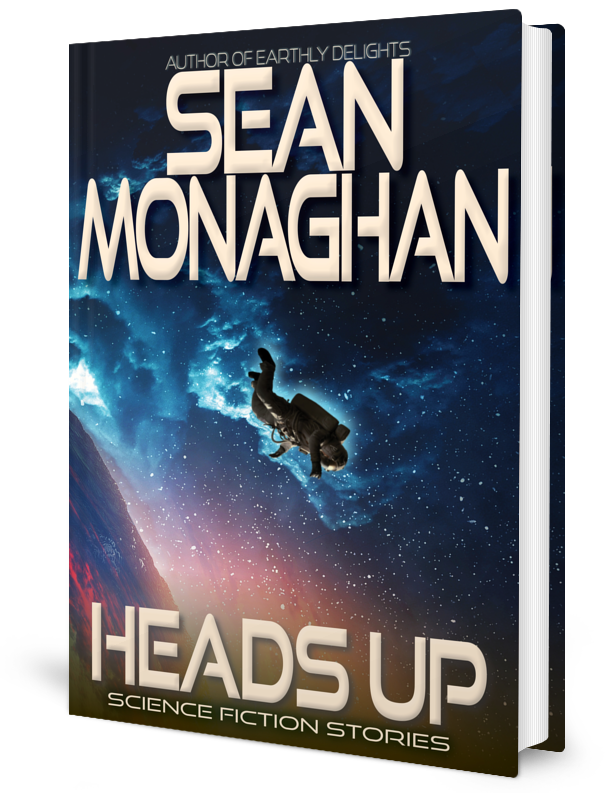
Well, having ranted, there a little perhaps, I will mention that I have a new science fiction story collection out this week. Heads Up includes seven recent SF stories of varying lengths. Details here on the website. Also available from your favorite retailers.

Heads Up

Big Adventures
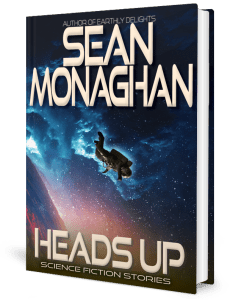
An epic collection of mind-shattering stories that vault across the cosmos.

A woman looking for her father. A crew trapped on a bizarre planet. A researcher stuck inside her models.

And More.

Seven blistering stories of calamity and catastrophe, all with a deft human touch.

Includes the acclaimed time travel novella “Chasing Fox Palton”.

A fascinating collection from award-winning writer Sean Monaghan, author of the “Wildest Skies” series.

Cover image © Adobe Stock.


Thanks for reading,

Sean
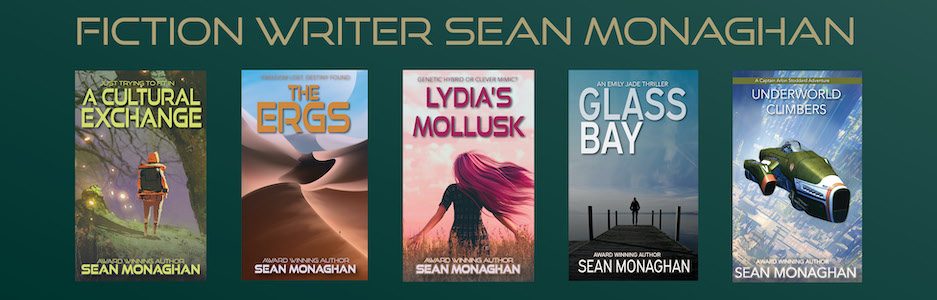
Wildest Skies Kickstarter coming in March

Back in 2024, my novella “Wildest Skies” appeared in Asimov’s Science Fiction. It was a fun story to write. So much fun, in fact, that I found myself writing a whole lot of other stories. Some of these have been published and are available from the website: www.wildestskies.com.

But there are others, and the original novella, and it seemed appropriate to bring all of them together in a collection.

First up, the collection, with a bunch of other rewards, will be released on Kickstarter late in March – check out the prelaunch page here. You can follow it to be notified on launch. That will be around about March 25th.

They’ll be out on general release from the usual retailers later in the year.

Eleven adventures, a mix of short stories and novellas. Something for everyone. Well, if you like your science fiction nail-biting and with high stakes.

And in the Kickstarter, they’re available both as standalone ebooks, or all together in the complete collection volume.

I’ll update here closer to the time, but feel free to check out the pre-launch page.

Cheers

Sean


Oh, and as thanks for reading, and to encourage you to enjoy these stories, here’s a discount to get the story “Landing Protocols” for free on the website:

Enter the code LandingProt26 at checkout and the we’ll send you the ebook for free.

A blistering sci-fi tale of rockets gone wrong and pilots driven to their limits.

And beyond

When astronauts Ed and Giselle embark on a routine lunar training mission, glitches and worse demand quick thinking and brazen improvisation.

Because in lunar orbit, things happen fast and hesitation costs vital seconds.

A Wildest Skies story that gives new meaning to breathless.


The High Wire Artist

I mentioned in a recent post about how I enjoy not knowing too much about what’s coming when I’m planning on watching a movie or starting in on a new book. I should add as a contradictory corollary, that I do have some favourite movies I will watch again and again – where I pretty much absolutely know what’s coming.

But in that post I mentioned that when it comes to writing blurbs for my own books, that I work hard to ensure that I don’t give too much away, but do write enough to entice readers.

The balancing act. I like how the high-wire walker in the photo here has still got safety cables attached. You wouldn’t get me up on one of those things, but sure as eggs I’m confident that the smartest of those people have safety cables carabinered on.

Here’s my practise a blurb for “Mech Variant”, a Wildest Skies story coming out later this year.


A brutal and challenging tale that pits common sense against survival instincts.

Galactic explorer Ed Linklater wants a quiet moment enjoying planet Gladioll’s sweet, restful scenery.

To bad the scenery lies in the firing line.

A high-stakes emotional roller coaster of a story that takes no prisoners.


Do I give too much away there? Not enough? Have I straddled the balance of revealing enough to make someone sufficiently intrigued to read the story, but not so over-informed that they won’t bother?

As with anything in writing, I’ll just keep learning and keep striving.


image: Adobe stock. Book cover image © Grandeluc | Dreamstime


In Praise of Not Knowing

Note -the IMDB pages about the movies I’m discussing contain details that would be considered spoilers, in the context of what I’m writing about here.

I think I’ve written before about how I too often find book blurbs and movie trailers too revealing. As in, containing plot spoilers. How often have you watched a trailer and felt like you’d seen the whole movie?

Now, I do know that the makers of these trailers are experts at pulling disparate parts of a movie together to create a kind of flow within the trailer that creates a different story that’s distinct, perhaps even distracting from the movies true story. Still.

Long ago I watched a movie called “The Girl With All The Gifts“, on the basis of seeing the title and the movie poster (which as I recall was different from the poster on IMDB). I had no idea that it was a particular kind of movie, and didn’t realise for quite some time way through the movie – because it was well-crafted and neatly told.

Had I watched the trailer and read the blurb, I think I would have enjoyed the film less (something backed up when I was at a writers’ convention and the title was mentioned-I hadn’t know it had orginated as a book-I said what a great movie it was, to receive some murmurs of disdain from some others who had clearly read the book and found the movie wanting).

Now recently I watched another movie that I enjoyed, titled “Hurry Up Tomorrow“, again on the basis of the poster – well, the Netflix title card which showed a woman standing in front of a burning house. That was enough for me. There’s a whole bunch of story in that single image. So I watched the movie.

It started out weird, but went along the kind of off-beat, arthouse trajectory of many movies I’ve enjoyed in the past. Just plain odd. Well-made, well-lit, surreal and, for the most part, engaging.

I did not know that the lead actor is a well-known singer, and the story follows a vaguely autobiographical arc, with many liberties. I knew of him, but didn’t really know his music or his story. Afterward, I followed up, and read some more. Now, this guy’s music is not really to my taste-I had a listen to the sountrack album and some other songs. That’s okay. I like the movie.

Then, still following up, I found out the movie bombed at the box office. That it was critically panned, as self-indulgent and essentially an extended video for his latest music.

I didn’t get that at all. I just enjoyed a weird movie with an odd structure. If I had know all that ahead of time, I suspect I would have enjoyed it less.

What would I know, though?

I guess I’m just coming at this saying that, however my brain works, I like not knowing too much ahead of time. At least when it comes to entertainment.


Oh, since I’m supposed to be using this blog as a promotion tool for my writing, I should mention that my Yearbook 2025 is out now, both in print and as an ebook. This is a lot of reading-130,000 words-for not too much coin-$9.99 electronic.


The First Annual Collection by Sean Monaghan

A treasure trove of great reads, filled with compelling, mind-bending fiction.

Includes the Full novel The Ingersal Ballet, the Award-Winning novelette “Daisy and Maisie, External Hull Maintenance Experts” and more, including “Sigrid’s Eagle”, “Caprock”, “Mangled Gravity”, “Peruser”, “Heading for Boise”, “Lying Cameras”, “The Quiet Hours”. And the never before published Morgenfeld story only available here, “The Diorama”.

With an introduction and an afterword by the author.


I think I’ll do a follow up post in the near future about working on my own blurbs so that they give away just enough of the story to get the reader intrigued, and not enough to put them off.

The High Wire Artist.

Thanks for reading.

Sean


Movie ticket image: Adobe stock

The Yearbook, and other monsters

Finally making an effort to show up here and make some updates on the writing and publishing trajectory through December. It’s been a cool month. Three big publications – “Chasing Fox Palton” a new novella, Sean Monaghan’s Yearbook 2025 and “Barnacle” a new Venus Vulture album.

Let’s start with the Yearbook, since, among all that nuttiness, it’s probably the nuttiest.

A Yearbook. This is a 600+page collection of various publications from 2025. Short stories, novellas and even a complete novel. With afterwords and an introduction.

One unique story, “The Diorama”, never before published… because I realised after I’d written it, that it kind of had spoilers for the novel The Ingersal Ballet, so should not appear alone (it follows the novel in the volume, with an introduction recommending readers don’t even look at the story until they’ve finished reading the novel).

I guess this book is in lieu of writing a list of my year’s achievements here on the blog (but that was publishing six novels, sixteen short stories – including stories in AnalogAsimov’s and Pulphouse, four novellas and some occasional blog posts). A busy year I guess. I’m planning something even busier next year.

The contents of the volume are:

Sigrid’s Eagle (Traditional fantasy short story)

Mangled Gravity (Contemporary fantasy novella)

Heading For Boise (Horror flash fiction)

Caprock (Thriller short story)

Peruser (Cole Wright thriller short story)

Daisy And Maisie, External Hull Maintenance Experts (SF novelette, also winner of Analog’s Anlab Award for best novelette)

Lying Cameras (Contemporary fantasy novella)

Visit Me, Oh Dreamer (SF short story)

The Quiet Hours (Morgenfeld short story)

The Ingersal Ballet (Morgenfeld novel)

The Diorama (Morgenfeld short story)

All of which are still available individually (save for The Diorama which as I mentioned, I realised after writing it, contains spoilers for The Ingersal Ballet).

Releasing on December 31st the Yearbook retails at $9.99 for the ebook – find your favorite retailer here. The paperback will be $25.99.

Also directly from the website here seanmonaghan.com immediately.


I also have a new novella out – a mind-bending time travel tale “Chasing Fox Palton”.

In a twisted and tangled world, Time Operative Haylee Dahlen just wants to find the crook Fox Palton.

And no one knows exactly what Fox Palton wants.

A vast story of come-uppance and betrayal that stretches across the decades and centuries, with a pace that defies time itself.

From the author of the quirky time travel tale “Can You Outrun a T-Rex?”

$3.99 from the website here. Readers of this blog can use the code FoxP50 to get it for half-off ($1.99) – thanks! Code expires on February 28th 2026. Use it wisely.

Other retailers here, including paperback from Amazon ($14.99).


As a sideline, I also create soundscapes and ambient music as Venus Vulture. The latest release, just out on December 12th, is Barnacle. 40 some minutes of drifty, loopy drones. Available from Bandcamp, priced at $7. Also on vinyl from Elastic Stage, a little more expensive there at around $38, plus shipping. Both sites let you listen to the tracks for free, so there is that.


So that rounds out 2025. Big plans for 2026, including, once again, being present more often here (as in, rather than one big post about a bunch of releases, doing individual posts). I’ve tried that before and fallen over. I do, however, have some better structures around out for next year.

Thanks for reading.

Sean

Wilkes Landing – a new novel in a new genre (for me)

That’s it there. Wilkes Landing. Get it right now, if you dare, from the website – use the code FirstInWins25 at checkout to get the ebook for half-off. seanmonaghan.com  or use direct link here. That’s a $5.99 ebook for under three bucks. Move quick, this expires in January. As they say, we really can’t hold the price that low of any longer.

It will be out on general release in the usual places from November 15th.


On The Edge Of Heartache

When a high-stakes airliner emergency drops Alicia into the arms of hunky firefighter Brent, she finds herself torn and distracted.

The hidden charms of small-town Alaska create the perfect setting for entangled hearts and rising emotions.

On a path to heartbreak, or bliss.

With nothing in between.


If you’re  a regular here on the blog (and I know you are, even if I’m not so regular myself), you’ll know that mostly I’m off writing in other genres. You know, Science Fiction and Thrillers and even those Fantasies you’ve seen popping up this year. Why confuse things with something that’s clearly romance? I mean, you can tell from the cover, right? Right? If not, then I’m doing something wrong.

My answer? I’m interested in telling stories. Making stuff up. Stuff with an upbeat ending, and this genre guarantees that. While my SF and other stuff does have positive endings, the genre doesn’t necessarily demand it. Horror, on the other hand, well.

So with this I just tried to tell the best story I could. It’s a sweet romance, with no spice, in case you’re wondering. Always conscious that my mum might read something I’ve written. Yeah.


It’s occurred to me that I’m always listening to music as I write and publish, so I thought I might mention what I’m currently listening to, you know, in case it’s something you might enjoy.

Right now, I’m immersed in listening to Wisp’s album If Not Winter. Part of, I guess, the shoegaze revival happening now. If Not Winter is a wonderful blend of drenching guitars run through pedals, with delicate softly-sung melodies. Sometimes that distortion is a little much for my taste, but there’s enough of the acoustic side to keep it engaging and fun.


Thanks for reading.

“Meeting Susanna” – featured story in Pulphouse Magazine issue 40

Often my fiction is pretty straight down the line – hard science fiction, or gritty thrillers. But then, sometimes I write something a little more offbeat – like my last story in Pulphouse issue #37, “Artie Beeline Meets Someone”, which I myself have difficulty classifying (kind of science fiction, kind of fantasy, kind of comic-book… without the illustrations).

Pulphouse Issue #40 is out now, with my story “Meeting Susanna” as the featured cover story. You know, it’s an honor to be among some great writers there, but to be the featured story is a double honor.

An immortality story with a heart.

Pulphouse runs the gamut of slightly off-beat stories, from detectives, to science fiction to simply unclassifiable. What you can count on, though, is (ahem) some really amazing writing. Editor Dean Wesley Smith does a great job of not only selecting stories, but encouraging and developing writers.

Pick up a copy today – just $6.99 for the ebook – Pulphouse Issue #40

Blurred Horizon – new Venus Vulture Album out now.

I have a new ambient album out now on the Zenapolae netlabel.

In between writing and more writing, I do find a little time to tinker with my modular rack and little bits and pieces of software and work up some electronic music.

Blurred Horizon garners some of its inspiration from time spent on Naoshima Island in Japan – the cover photograph was taken from the shore there. Coincidentally (or not), just along the road from where I took the photo, lies the Benesse House Museum, a wonderful gallery, which, at the time we were there, had a series of seascapes photographs by Hiroshi Sugimoto, which may bear some similarity to this photography. Sugimoto’s “Boden Sea” photograph appeared on the cover Richard Chartier and Taylor Deupree’s album Specification.Fifteen and later on the cover of U2’s No Line On The Horizon. Sugimoto’s photograph was taken elsewhere… Lake Constance, I believe.

Blurred Horizon is composed of fragments and loops. Plenty of slowly evolving drones. As I usually mention when I have new music out, this is music to write to. When I was starting out as a writer, I loved having soft ambient music in the background, but it was difficult in those days to find new music, so I found myself experimenting and making my own. Times have changed, and there’s more ambient around than I could really get a chance to listen to… and still I find myself taking a break from writing and making some more.

The album is a free download from Zenapolae. Enjoy.