The Bubbcat in Cirsova

cirsova-4My short story “The Bubbcat” appears in the Fall issue of Cirsova magazine. Cirsova has now reached its fourth issue and goes from strength to strength. I’m pleased to have my story here.

_________________

Dolci D.’s job should be simple. Retrieve and protect the Bubbcat. Easy. It turns out, the device can just about take care of itself. And when people start bombing subway stations, Dolci D. needs every bit of help the Bubbcat can give

____________

A great collection of stories here, running the whole gamut. I’m pleased to be in such great company. Lots to enjoy.


At the risk of getting myself in trouble, some NaNoWriMo thoughts for writers

National Novel Writing Month – NaNoWriMo – is a celebration of writing, described on the website as “a fun, seat-of-your-pants approach to creative writing”. The idea is to write a whole novel during November.

nanowrimologo.jpg

I think NaNoWriMo is a wonderful thing. It gets people writing. Gives focus and milestones and goals. Fabulous.

One little niggle though, and I may be wrong, so feel free to shout me down. It seems to me that participants are encouraged to write fast and sloppy. Get the words down and come back and fix them later.

As if ‘fast’ and ‘sloppy’ are irrevocably linked.

I’m not convinced that’s the best approach.

For a time I tutored in a university creative writing programme. I hold a Masters of Philosophy in creative writing. As part of my job I even run writing workshops for children. I’m not sure any of that really qualifies me to give NaNoWriMo advice (or any writing advice for that matter).

Nor have I ever participated in NaNoWriMo.

So, my thoughts are really just the opinion of a relative layman.

That said, I have written a novel in a month. It just happened to be June of this year, rather than November. I’ve written several other novels this year, mostly though, taking more than a month (forty days seems to be my around-about duration).

So, if I think ‘fast’ and ‘sloppy’ is not the best approach, what do I think?

Why not write fast and the best you possibly can? Those two can go hand in hand. Really, that’s how I strive to write. I can’t say if my writing’s any good or not (that’s up to the readers), but whenever I sit down to write, I don’t go sloppy. I write the best I can. Sometimes it works, sometimes not, but I’m always working to write the best I can.

I think if you write sloppy, that might be how you’re training yourself to write. I doubt that Venus Williams plays sloppy when she’s practising. I hope the guys who put a new roof on my house didn’t hammer sloppy. I don’t do a sloppy job on my taxes and come back to fix it later.

Write the best you can. Every time you go write. Even if you’re aiming to write a novel in a month.

So, that’s my two cents on NaNoWriMo. Have a great month. Write a great novel. And as you write, do the best you can.

Final entry into the Writers of the Future Contest

I have made my final entry into the Writers of the Future Contest. For the last five years I’ve entered every quarter, but with my forthcoming story in January’s issue of  Asimovs, my eligibility comes to an end.

WOTF-FINALIST-#31Writers of the Future is perhaps the premier writing contest for non-professional speculative writers.

I’ve been a finalist, and I’ve had straight rejections. My tally over more than twenty entries also includes numerous honorable mentions, a silver honorable mention and three semi-finalist placings. So often feeling so close.

I felt a bit sad clicking ‘submit’ with my final entry. This thing is over. I have numerous friends who’ve won the competition and been published in the anthology. I would have liked to join them (well, I still have this one last shot, right?).

Flipside: I feel elated. I wouldn’t be losing eligibility if I hadn’t been having success with my writing. And I wouldn’t be having success if I hadn’t been tenacious. Taking those non-winning stories (and other stories) and sending them to other markets. Writing and learning and sending off and writing some more.

Now of course, I have my sights on some other prizes and awards. Aim high.


Octavia Cade in October/November Asimov’s

asf_octnov2016_400x580Taking a break from my regular programming here to shout out to fellow New Zealander Octavia Cade, who has a story in the current issue of Asimov’s.

Living, as I do, in New Zealand, my copy has only just arrived (I have a print subscription, rather than that sci-fi type electronic sub).

I’m behind on my reading, so I may not get to Octavia’s for a little while, but I know it’ll be great.

Octavia was, btw, the winner of the Sir Julius Vogel Award this year for best novella – a category for which I was also a finalist (grrr). 🙂

But do go pick up a copy of Asimov’s. Despite my late announcement here, it’s still available.

Why I didn’t enter the Sunday Star Times Short Story contest this year.

2019 update – I note that they haven’t changed the rules, so the below still applies. Disappointing. Not even bothering to write a new post this year.

__________

sst-logoThe Sunday Star Short Story Contest is an established New Zealand contest. For the most part it’s run annually. With the disappearance of The Katherine Mansfield Short Story Award, the Sunday Star is now, as far as I can tell, the major New Zealand short story contest. And one of few that does not ask entrants for an entry fee.

The prize is substantial. $1000. For a 3000 word (maximum) story. That’s about thirty-three cents a word. Getting into the non-fiction per word payment range. Pro-fiction rates get up around ten cents a word, mostly around six to eight cents.

That tells me I should enter.

I’ve been long-listed for the contest in the past. My writing’s getting better. I’m losing eligibility for other contests because of my pro/almost-pro status.

So I wrote a story. I’m pretty pleased with it. I got it proofed and ready to go.

I went to the site to enter. That’s easy. Fill out the form, attach the document, click the ‘enter’ button. By entering I agree to the rules.

You know those sites we sign up for and we tick the box to accept the terms and conditions? Some of those documents are massive. We put our trust in them. Mostly that’s just fine.

Anyway, I decided I should read the rules. Really there were only eighteen. A little more than a page. Compared to some of those ‘terms and conditions’ documents, nothing more than an eye blink.

In the past the Sunday Star Times Short Story Contest. offered prizes to the first, second and third place-getters. Now, it’s just one prize. That’s okay. Things change.

– Open to permanent residents only. Check.

– Maximum of 3000 words. Check.

– Maximum of one entry per category. Check.

– Original work. Check.

– The finalists’ names, entry details, biographical information and photographs will be required by Fairfax Media and will be used for promotional purposes without compensation. You consent to this use of your details by entering the competition and agree to your name being published without notification or prior approval.

Uh. Hold on. “Without compensation”? Oh well, I suppose that’s all good promotion. Name and photo in the paper, if I happen to be a finalist. Nice for the ego and so on.

Okay. On with the rules.

– All entries submitted remain the property of the entrant. However (my italics), Fairfax Media and Penguin Random House New Zealand have the right to publish the winning and highly commended manuscripts of the Open Division, Secondary School Division and Non-Fiction Essay entered without fee. (my bolding).

What? “Without fee”? Really? So that amounts to: If I enter they’ll be able to publish my story without paying me.

It does say ‘winning and highly commended’, but it doesn’t say what constitutes highly commended. From my point of view anyone who gets it together to write a story and send it off should be highly commended. It takes courage and effort. Well done. If that’s the criteria, then any and every entry could qualify for publication ‘without fee’. Oh, except for the winning entry.

While I’m having a rant; right now there’s a New Zealand magazine that publishes a short story each month. As I understand it they take a vote or something at the end of the year and choose a winning story from those twelve and give that writer a prize. The other eleven do not receive anything save publication. I’m not even clear that they get copies of the issue in which they were published. Effectively those stories appear ‘without fee’.

This is why I didn’t enter. Writers get paid. The journalists in the paper and magazine who write the articles about the treaty and the housing crisis and climate change all get paid.

And that’s why I didn’t enter. That story I wrote? I’ll be sending that off to a paying market.
100 Submissions

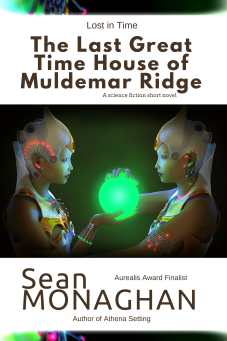
Last great time house.png So, as well as tracking my word count this year, I’ve also tracked my number of submissions. Now, I do keep close track of where and when I’m submitting (it would be kind of silly not to), but this is the first time I’ve ever recorded the actual number as well.

So far this year I’ve made 100 submissions. That’s submissions of short-stories/ novelettes/ novellas to various markets. It doesn’t count items I’ve sent to indie/ self-publishing.

To be clear, though, I have completed a total of fourteen new pieces. All of those submitted. There have been some novels that have gone directly to indie, so I’m not counting those.

Getting to one hundred submissions means some of those fourteen, and some of last year’s stories (and a couple from the year before) are finding themselves resubmitted. This is pretty standard practice. One market rejects a story, off it goes to another. Repeat. Heinlein would say ‘repeat until sold’.

Of those fourteen, I’ve so far sold six. Not a huge number for me, but I’ll take it (of course). Pretty low ratio in terms of submissions: six percent, but not too bad in terms of stories completed.

Cover illustration for The Last Great Time House of Muldemar Ridge © Ateliersommerland | Dreamstime.com

Aussie SF Snapshots 2016

aussie sf snapshotsAussie SF Snapshots takes a quick look at the Australian SF community with a series of incisive interviews. I was fortunate enough to be interviewed by the esteemed Shauna O’Meara for the 2016 Snapshots. Shauna’s widely published and a Writers of the Future winner. I’m honored to be among such great company.

My interview is here: Sean Monaghan

Some of my friends also have snapshots.

Shauna’s is here: Shauna O’Meara

Steve: Steve Cameron

Gerry: Gerry Huntman

Talie: Talie Helene

Oh, and while I am actually living back in New Zealand, I hold dual citizenship, and I completed my masters at the University of Queensland in Brisbane.

Ink for a Verbal Contract – new story out in Ad Astra

Water-in-ColorTo round out a busy month of publications, my story “Ink for a Verbal Contract” is out now and available to read for free in James Gunn’s Ad Astra, together with a gorgeous illustration from Susan Nicolai.
This story goes back a long way. Once upon a time, it was a finalist (my one and only) in the Writers of the Future contest. So it came close. I’m just about to pro-out of the contest (it’s open only to non-professional writers and I’m soon to be considered professional), so it’s cool to see this story published.

With that, this story was my baby, in a way, a cherished one. I was not about to let it vanish, so it’s stayed on the submission rounds, and I’m pleased to have it in Ad Astra (my second story with them, after Mars Bomb Bound for Titan a couple of years back).

I also need to acknowledge my friend Monique Bowers for her invaluable feedback when I first drafted the story. Thanks Monique!

_________________

Ink for a Verbal Contract

by Sean Monaghan

Gemma felt the pain right away. She sighed, stretching, angling her limbs and hips, trying to find a more comfortable position. She blinked, looking at the Arhend side table strewn with folders.

Her Gadjet saw that she was awake and sat up, a message flashing on the screen. Alex had called during the night, and the Gadjet had let her sleep, waiting until now to show the message.

“Good results here,” the message said. “Promising prospects. Call you later on.”

… click here to continue reading

________________

To join SFWA, or no?

SFWAcolorWith my recent publication in Asimovs, I am now eligible to be an Active member of SFWA. Cool, that feels a milestone.

The Science Fiction Writers of America is a professional body, advocating for sf writers. I know that several of my friends are members. It seems like a wise move on my part to join up, and I probably will. Mixing with my peers is always fun.

The slight hesitation I feel revolves around location. While I have some American heritage, I’m not really ‘of America’. More like ‘of New Zealand’ (though I also hold Australian citizenship). Some of the benefits-medical support, attendance at the Nebula weekend, etc-feel like they’re only useful if I lived a whole lot closer.

Then again, I do get the the U.S. from time to time. Perhaps this would encourage me to flit over more frequently. And there is that whole collegial thing. What do you think?