A Visit to the Theatre – new ebook

vttt 2
I’ve just put up my story “A Visit to the Theatre” as an ebook through Triple V Publishing. The story first came out in the Static Movement anthology Bounty Hunter a couple of years back. The ebook is paired with a flash fiction story “The Neuron Thieves”, which was itself published in The New Flesh.

Here’s the blurb:
Nikki’s got a an urgent telex for an easy bounty. Niemann’s in town. All she’s got to do is find him. The trouble is, Niemann wants to be found.

ebook – $2.99
Kindle
Smashwords

Print – $4.99
Amazon

Imaginary Maid
The fabulous cover illustration is by Ateliersommerland, who also created the illustration used on “Imaginary Maid Forgets She is Late for a Banquet”.

Year end review, with a late rally

Close to the end of the year, close to completing some goals, distant from others.
 
My word-count goal went well: from 300,000 for the year (completed in August), upped then to 450,000 for the year (completed in November) and upped again to 500,000, and right now sitting at 497,065. Catastrophes aside, it looks like a slam dunk on that one. Yay.
 
Publishing 300,000 words didn’t go so great. It went pretty good – right now it’s around 203,000. Mostly self-published under my Triple V Publishing banner through Smashwords, Kindle, and CreateSpace/Amazon. It was gratifying to have several acceptances by publishers in there – about 26,000 words of that total were published in online and print magaziens such as MicroHorror, The Colored Lens and Takahe.
 
What about the other 97,000 words? Well, I sure wrote them. Part of it was procrastination: sitting on a 60,000 word New Zealand Literary novel instead of sending it out to some publishers (and then self-publishing it if it came back as noes). I’ll remedy that in the new year, with my new goals. Part of it was a pig-headed determination to keep things on the market – that is, numerous stories, novelettes and novellas that get rejected and go out again, rather than self-pubbing. I’ll fix that too: with some of the pieces that have been to the seven or eight main markets: the next time they come back I’ll pull them out of circulation and publish them through Triple V.
 
I felt like I spent much of the year feeling out in the wilderness: I’ve had more than a hundred rejection slips since January. Mostly form rejections, but there have been a few personal notes which has been cheering. The acceptances have helped out too – early in the year my sci-fi novella The Wreck of the Emerald Sky appeared in The Colored Lens. I had a few flash-fiction acceptances through the year, which was nice, but most of the longer works seemed to keep cycling. Then, a late rally. An acceptance for Takahe (a New Zealand literary mag), a third-placing in a regional short story contest, and an acceptance for Aurealis – one of Australia’s leading science fiction magazines. Coming just a couple of weeks before the end of the year, that acceptance has buoyed me no end: I am on the right track, and persistence pays (real money in this case, too).

Next year, I’m aiming at 500,000 words from the git-go. And aiming at publishing 600,000 (whether self- or traditional) – and have a plan in place to make the possible.

See you next year, with more goal updates.

Notes on “a little”

sship practice
I seem to be always submitting stories, and then re-submitting them elsewhere. Sometimes when a story gets rejected, the editor includes some feedback. I do find it a fascinating education when the feedback from one editor is contradictory to that from another (such as “This story is too long given the premise”, versus, “I found myself wanting more development and exposition – it feels too compressed”). Things like that help me realise how much taste comes into an editors selection and not to give up on stories I’m sending off.

Recently, though, I got a nice piece of specific feedback: that the story contained numerous uses of “a little” in close proximity. Nice call. It sure does. “He moved back a little”, “the projection looked a little worn”, etc. I went through the story (with Word’s search function) and combed them out – changing some, removing some, and leaving a few, before sending it out again. I got another story back yesterday and took a look at that too. 28 instances of “a little” in 8700 words. Some of them within a line or two. It doesn’t make for good readability. How could I not pick that up in proofing? I think I’m going to refine my process and add in an extra proof-read specifically to look for this kind of thing – not just “a little”, but any words or phrases repeated in close proximity. With yesterday’s story I deleted a bunch of “a little”s, changed some (“a bit”, “partly”), and left some (sometimes it’s just what I meant). After all these years of writing, I’m still learning, sometimes even the simple stuff.

450,000 and counting

Back in July I hit my word-count goal for the year: 300,000 words written. Five months ahead of my timeline. The writing was made up of two novels, a couple of novellas and a bunch of short stories. Being so busy with tutoring, I hadn’t expected to hit the goal so early. It left me with the question of what to do for the rest of the year. So I re-drew the goal, adding on another 150,000 words, figuring that actually tutoring through the second part of the year is bigger than through the first part so didn’t want to push too hard.

Partway through November I hit that second goal, even with tutoring. Another novel written, another bunch of short stories. Another novella. 450,000 words for the year. So far.

I’ve written every day this year. October 6th was my best writing day – 6781 words. This might well be my highest daily word count ever. At least my highest ever with being sane and able the following day. Back in my younger years I might have tried for something higher, but turned into a gibbering mess the following day. June 18th was my lowest count at 152, though I did mark four assignments that day, as well a work my 8-5 job. I’d always planned for and accounted for tutoring to knock the daily word count down: what was important was to at least get some words written.

So I’m tacking on another 50,000 words to make it an even half million for the year. As I write this, it means another 1300ish words a day. Do-able, though I will have to push. No tutoring, but I am studying – taking Dean Wesley Smith’s Essentials Workshop which runs for six weeks from December 5th and that’s going to keep me busy. In a good way.

Deadstick updated


To celebrate a year since my first re-engagement with Smashwords and ebook publishing, I’ve updated my dieselpunk story “Deadstick”. It’s got a new cover, and is combined with my steam/diesel-punk story “How Do You Like These Heights”. Combined with that, it’s also available as a print book. And a new blurb to go with that. I’ve been working on upgrading my blurbs to be a little more punchy. How’s this?

Hank’s scorching across the California sky in a race to save his son. The afterburners are overheating and Sally Jean is tearing apart around him. At 55,000 feet.
A dieselpunk story by Sean Monaghan, author of Pan Am 617 Heavy. Includes bonus story “How Do You Like These Heights”.

.
ebook $3.49

Smashwords
Kindle
Apple
Nook (looks like the old version today – hopefully they’ll update soon.
Kobo (also an old version – what’s going on?)

Print $4.99

Amazon
Createspace

Back from Vermont – reading, ebook and in print

My literary story “Back from Vermont”, originally published in Takahe, then reprinted in Midnight Train has now been published, with two bonus stories, through Triple V Publishing as both an ebook and in print.

Back from Vermont is one of my personal favourites – quirky and heartfelt and fun. It was fun to write and it’s nice to get it out there so many ways.

For those who happen to be in Palmerston North on Saturday October 13th, I’ll be reading the story (aloud) at the Palmerston North Book Fair at 11am. I will have copies of the book for sale ($11-), as well as some of my other books, and will do signings.

_____________________________________

Larry’s building a grand scale railway on the sidewalk right out in front of the house. And all along the street. Lisa’s furious, but the neighbors all want to ride. Includes bonus stories “Norwegians” (previously published in Literary Foray and “Steam Furnace” (first publication).

Front cover image by Giladm – Dreamstime

_____________________________________

ebook
($4.49)
Smashwords
filtering through to Nook, Kobo, Sony ereader and Apple soon
Kindle

Print (94 page paperback) – $6.49
Amazon

After all those noes, a yes.


It’s worth sticking with it. I’ve lost count of the rejection slips I’ve received this year. Give me a second, I’ll go check…

… back now, thanks for waiting. It’s fifty-four. 54 rejections so far in 2012. That’s from around 25 stories out and circulating. I’ve had a few acceptances, but mostly for non-pay* or token pay anthologies/magazines. Most days when I get a rejection, the story goes out to another publisher the same day. I love these days of email submissions: so much easier than back in the dark ages of envelope, stamp, return envelope and postage, printed cover letter, fresh print of the ms because the last publisher crumpled their copy.

Why send it out again ever? Well, publishers have different opinions, different needs and different expectations. On occasion some particularly generous (ie who has the time?) editors give some feedback… and the feedback can be wildly different: the aspects of the story they found didn’t work will be entirely different. I also keep trying to remember that last of Heinlein’s rules – keep it on the market until it is sold.

The new acceptance is from a New Zealand literary magazine – Takahe – who’ve published stories of mine before. It will be nice to be in print again.

*Why take no money for a story? That’s kind of contradictory to good business sense, no? Well I guess part of it is my ego is still tangled up in there. Another part of it is that when I come to self-publish the story through Triple V as an ebook (and possibly print), then the rights revert to me immediately.

Lucy Snyder – on sales versus publications

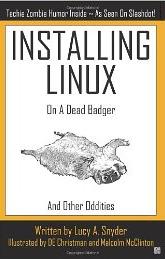
I’ve had Lucy A. Snyder’s slim collection Installing Linux on a Dead Badger on my shelf for a couple of years, always meaning to get on to reading it. From the title you can tell it’s pretty tongue in cheek, and it is. From sly snickers to laugh-out-loud moments I really did enjoy the collection. Some of the stories are told in fairly standard narrative, while others are written as news reports. There’s a thread running through the book – the whole Linux as a way to work with the undead, and similar ideas – which makes it a strong unifying whole.

This prompted me to check out her website, and Lucy’s been busy since (and before) publishing the badger book – several books from Del Ray, which I’ll be checking out.

That all leads me to the point of my post – Lucy’s cool post “On sales versus publications” about why she lists her story sales, rather than her publications. Go read the post. Okay, it’s a few years old now, but the concept still stands. It’s been argued elsewhere – along the lines of treating writing like any job, a writer deserves to be paid – but Lucy gives a great and concise argument.

You’ll see in my bibliography I list publications. Just a handful of those are genuine sales, and many of those for token amounts.

First try at publishing a double-header


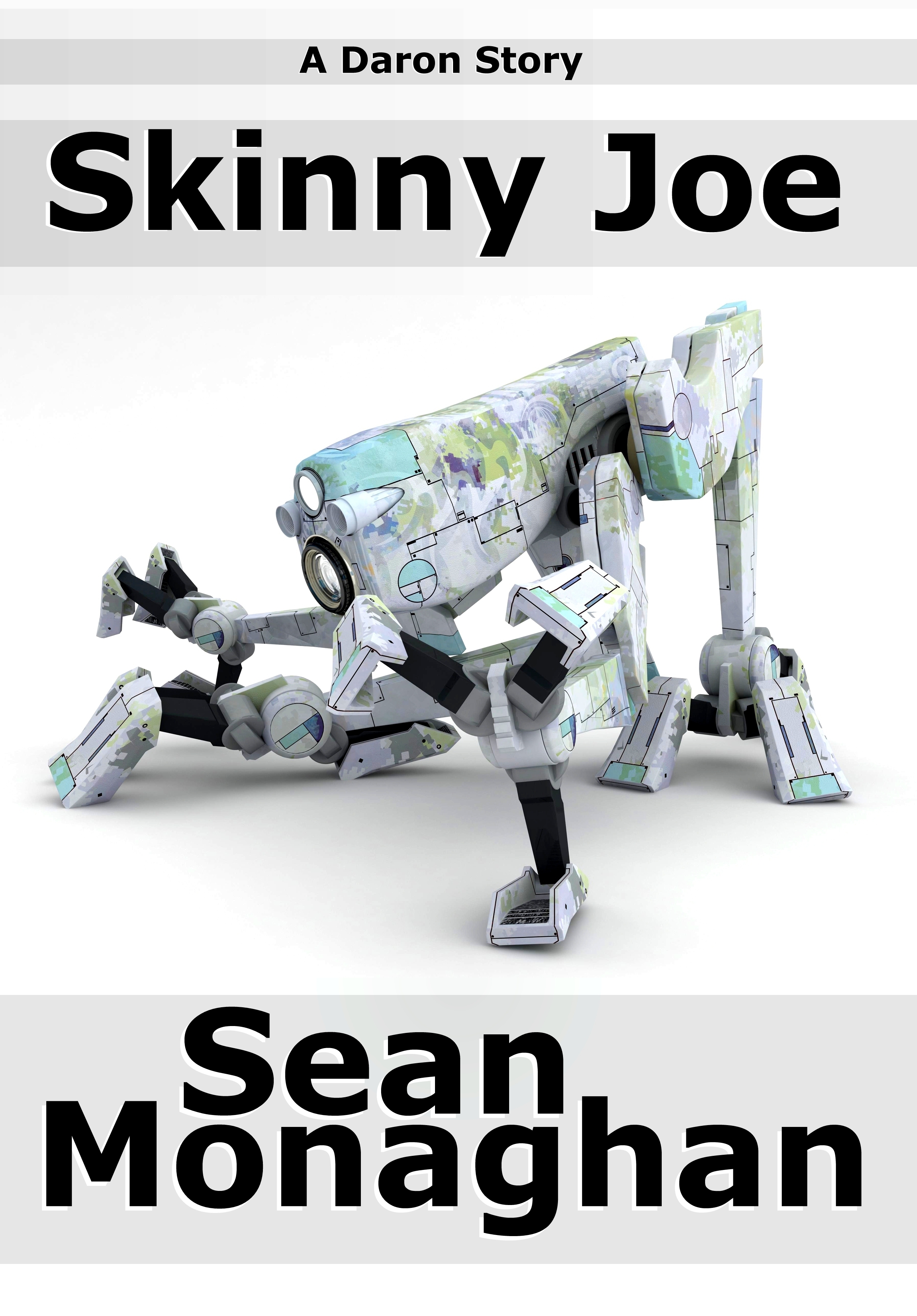
As my self-publishing empire lags and stutters along, I’ll keep trying new things. What a learning curve. Following ideas from Dean Wesley Smith and Kristine Kathryn Rusch with their publishing arm WMG Publishing I’ve published two stories – Pipe Dive and Skinny Joe together, as one package, but as two separate units one with each story as the lead title. The content of each is the same, just in reversed order. They are linked stories – both set on the same world, with the same group of researchers (though in these two stories there’s no character crossover, there are, and will be, in other stories).

As you can see, I’m also working with covers – one is self-designed, the other is a commercial/professional illustration. I’ve bumped up the font size and word layout while trying to retain the general Triple V Publishing look. I noticed on some covers (like Xuento), the author name almost vanishes. Spreading “Monaghan” across the width, then tucking “Sean” in above, nestled between the “M” and the “h” risers makes the name visible at even thumnail size. I’ve simplified the covers too – no tagline, not even the Tripe V logo (perhaps that’s a mistake, we’ll see).

I’ve worked on my blurbs too – trying to be active and succinct. I think next year I’ll look at taking Dean Wesley Smith’s course on writing pitches and blurbs. This is how they look at the moment:

Skinny Joe
A Daron story. Skinny Joe’s on a deadline. And he can’t wait to get home to see Paula. But when he triggers something in the depths of the structure, it looks like he’ll be lucky to get out alive. A short story by Sean Monaghan, author of The Tunnel and Rotations. Includes bonus story “Pipe Dive”.

Pipe Dive
A Daron story. Pieter thought divorcing Mel would have been the end of it. Now he’s trapped in an artificial cavern deep in the structure. With Mel. And there’s no way to get back. A short story by Sean Monaghan, author of The Tunnel and Rotations. Includes bonus story “Skinny Joe”.

Buy them here: Skinny Joe and Pipe Dive. Soon on Kindle, B&N and so on.

Skinny Joe was originally published in Infinite Windows, and this is the first publication of Pipe Dive. That’s a new experiment – most of the Sean Monaghan fiction I’ve self-published has been of previously published works.
Moving the goalposts

So I crossed the finish line. 300,000 words so far this year. Publishable? I hope. Some have been published already – some self, some with small presses, some have been accepted for upcoming publication and others are out with editors. As I wrote during my evening block of writing time I knew I would cross the line – I had 586 words to go. (This is how I’ve kept track of that – click to see the whole thing – a bunch of numbers I fill in each day and let Excel calculate to get totals and percentages. The bottom right corner gives me the total):

but I kind of lost track as I became more engaged with the current story. I ended up writing over 1100 words for the session – a reasonable day. In some ways I was pleased to see that I continued on without even realising… for a few days I’d been wondering if I would kick back and just congratulate myself and fall into the habit of watching bad TV. As I wrote a few days ago, I’ve reset the goal, and I think that will help keep me on track and motivated.

The spreadsheet above might seem a little OCD (I don’t scrub my hands, though I see elements of needing to know numbers in me), but it’s helped me have my eyes on the target. That percentage figure in the bottom corner ticking over has helped me focus. I’m keeping that – it’s at 100.20% now, and I’ll let it go on up to 150%, but I’ve added in another little ticker beside it for the August to December goal in the bottom corner:

That’s going to challenge me. I’ll have to stay at around an average of 1000 words a day. While December is clear, there are four tutoring deadlines between now and the end of November and two of those will be full-on: six weeks of pretty intense reading and feedback. I don’t expect to get through a lot of writing during those weeks. Still, I might play catch-up through December. The plan is to write The Deluge, the second part of The Hidden Dome trilogy, between the last day of tutoring and the last day of the year. That’ll be more like 2000 words a day.