venusvulture.com revamped site

The new venusvulture.com website is working a treat now.
.

I figured out what I’d done wrong (see the bottom of this post) – I’d made the base of some images in Windows Paint, which capitalises the .JPG extension, and then the html didn’t like them because they were all .jpg. The joys of hand coding.
.
.

Sure, there’s tinkering to do, but it’s looking better than the minimal look it used to have.

New index screen at venusvulture.com
.
.
.
.
.
.
.
.
.
.
.

________________________

(Original post and graphic)
Gurgle and sad faces. My updates to the website seem to have gone squish (it’s a long story involving using two different computers, and being away from the other one as I post this). At the moment it looks like this:

Well that’s not working for anyone (though, surprisingly enough, the links do work). Somehow I think I’ve rushed Filezilla and missed getting some of the pictures uploaded. Will fix it later on. Yes, normal service will be resumed.

Chapbook now available

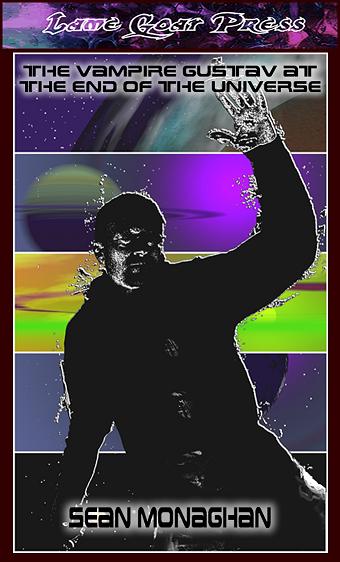
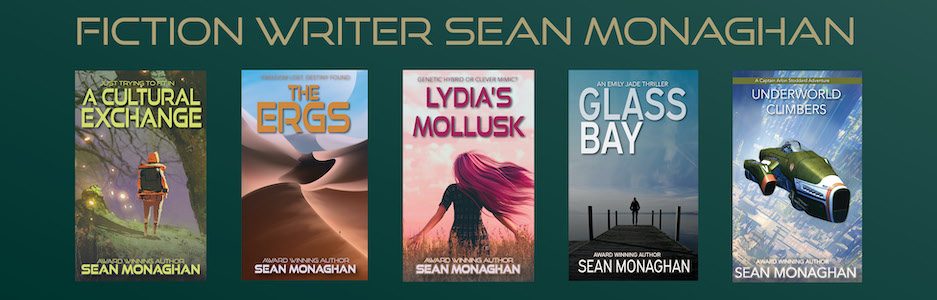
My chapbook of short stories – The Vampire Gustav at the End of the Universe – published by Lame Goat Press is now available from CreateSpace. 52 pages, $6.95 (US), plus postage. I think it will be available through Amazon soon.

Table of contents:

Airpocket
The Neuron Thieves
Automated Service
The Cottage Garden
Equilibrium
Zemogorgon
Submissions
Missoula Night Hikes
Join the Band
The Servants of Darkness go for Pizza
Let Go Samuel
The Vampire Gustav at the End of the Universe

Most of these stories have been published in zines or magazines, but it’s nice to bring them together – kind of like a balanced “best of” collection, a mix of humour, sci fi, crime and horror and a little blending.

Lie Beside Mary – horror story now at Flashes in the Dark

This one jumps around a little with tense changes and location changes, perhaps too confusing, I don’t know, but I hope you enjoy Lie Beside Mary, just a little story about a couple going out for dinner. A quick read and I see I’ve screwed up one of the tense changes (it made sense when I was working on it). Proofreading never ends.

My thanks to editor Lori Titus for taking this story on. There’s lots of other great fiction at Flashes in the Dark, including Lori’s own Maradith Ryder series.

Productive, elevating and exhausting retreat

Safely back, 16,000 words later, and ready to have a break now to catch up. Lovely environment, by a river with morning birds and waving pine trees, hardly anyone around. I took some photos with the cellphone, when I scrape them off that, I’ll upload them here and at flickr.

Productivity? Lots of stories completed to a first draft stage, others re-written from abandoned first drafts and much better for it. Now to print these out and start work on them all over again.

Funny thing, I seemed to go mostly sci-fi and some fantasy, very little horror or literary.

Writing retreats …

So I’m going away for three nights on retreat, with a bunch of notes and the laptop, expecting to come back with some first draft stories and some editing done on others.

Why? Why should I need to get away? Shouldn’t my workspace be set up well enough that I can write at my desk, in my home-office?

Well, it is – I have an excellent encouraging set-up with two desks, one for handwriting one with a computer, great lighting, an armchair for reading, packed bookshelves for inspiration. But there is something else that being elsewhere brings – a new space, different sounds, different views, different distractions. No internet, no laundry or dishes, no house repairs to be done or garden to be weeded (and boy does the garden need weeding) – nothing hovering: just concentrated writing time.

Orson Scott Card – Keeper of Dreams

Orson Scott Card – Keeper of Dreams

This collection of stories by sci-fi superstar is a patchy mix of a variety of odd pieces from a variety of sources – most of his stories have been compiled in earlier collections and since he focuses on novels more than stories there are fewer stories left to put into a volume.

While the stories are cool and compelling, what Card does so well is offer commentary about each: about the history and writing process that went into making the story, whether it be something he thought might be a novel, or a quirky idea he had or what have you. As a writer I find this aspect of the book the most interesting – more so than the stories themselves even. How does Card’s mind tick, why does he write the way he does, and so on. Fascinating, and perhaps as good as almost any writing course might be. I once had a friend to ask me to recommend a good guide to writing a novel and I suggested reading Card’s Pastwatch: The Redemption

Card’s official site is here.

Voice-over

Following yesterday’s post on movie voice-over as a telling rather than showing technique, I was thinking about the seminal cult movie Blade Runner whose initial release included a narration, but later “Director’s Cut” versions eliminated that – making the movie, to my mind, stronger and more engaging. I sometimes wish I’d never seen that original, which seems to diminish the later “Final Cut”.

The invention of telling

One of the popular credos of creative writing is “show, don’t tell”. This is a kind of multi-cellular thing – sometimes for the sake of brevity or pace you’ve just got to write some exposition or state an emotion – but mostly not. I’m guessing it also depends on your audience too – who are you writing for?

Last weekend I watched the first few minutes of The Invention of Lying before switching it off. Now the movie has garnered some good reviews, and I do admire Ricky Gervais’s talent – his moment was the best thing about Night at the Museum (don’t get me started on that movie, whew) – and his energy, his comic timing and skills both on and off screen. The premise behind The Invention of Lying seems pretty cool too: a world where no one can tell a lie, upset by someone who discovers how to. The thing was – and here’s the point about show, don’t tell – the movie begins with a voice-over explaining all that.

Why explain so explicitly? Where’s the elegance, the subtlety, the build? I guess it’s worked on a level, given the positive reviews on IMDB, and since I didn’t watch the rest of the movie I can’t speak about it’s merits later on (just that the first voice over, and the first couple of lines of dialogue were enough to put me off). From the cover and blurb I already knew enough about all that – I guess I was looking for some chance to discover this world, to learn and grow with it, rather than being slammed with the obvious right off.

I’m in no position to dis the film – that’s not my intention – I just want to examine that technique and question it. What if they’d begun just with that city fly-over, then in the building as the nervous man (shown through his demeanour and actions) heads to his blind-date’s door, without the voice-over? What if their first moment of conversation was a little more subtle? Certainly, that would have engaged me more – and I likely would have watched beyond that.